
On this page
- What types are there?
- How does each perform under Kitsap trees?
- Are screens worth it?
- Are perforated covers a middle choice?
- Do reverse-curve hoods work here?
- Why avoid foam and brush inserts?
- How are these guards fitted?
- What does pitch mean?
- Which guard suits which lot?
- What do they cost?
- How long do they last?
- What warning signs should I watch for?
- Does the installer need to be registered?
- What should I ask?
- Guard types and parts
- Do any of these suit a metal-roofed shop?
- Should I remove an old screen before winter?
What types are there?
| Type | What it is | Fixing |
|---|---|---|
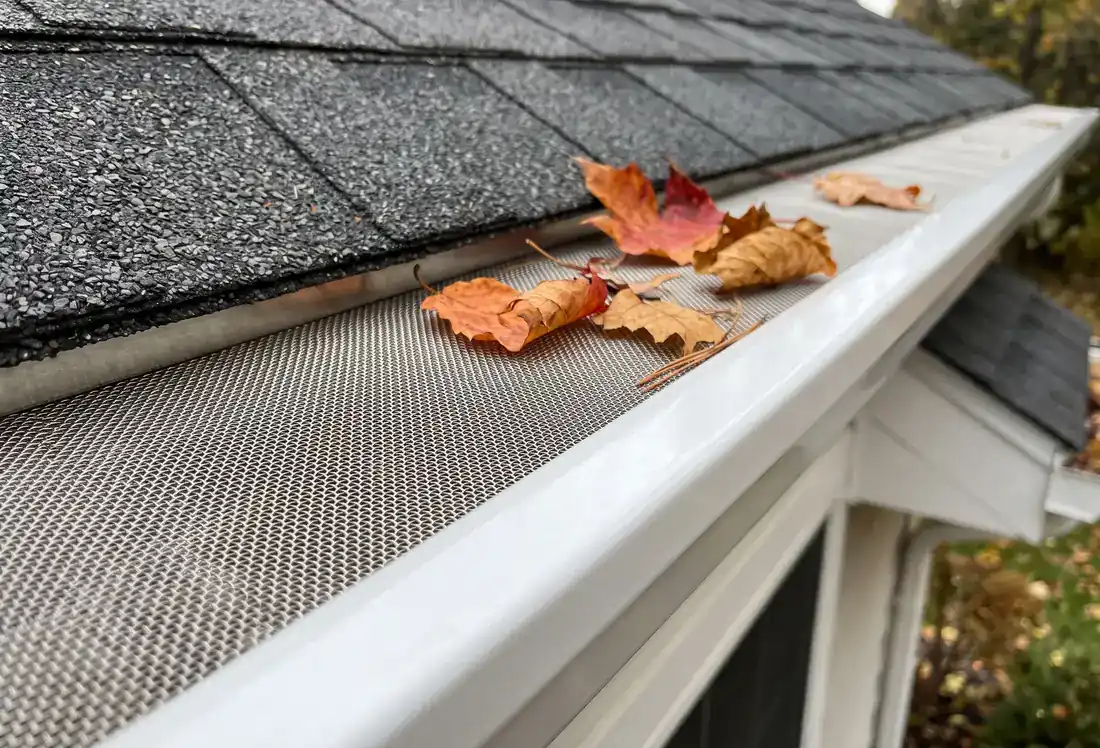
| Expanded-metal or plastic screen | Sheet with diamond-shaped openings | Drops in or clips under the lip |
| Hinged screen | A screen that lifts for access | Clips to the lip |
| Perforated aluminum cover | Solid sheet with small holes | Screwed to lip and fascia |
| Reverse-curve hood | Solid cover with a rounded nose | Fascia or under the shingles |
| Foam or brush insert | Filler inside the gutter | Pushed in |
How does each perform under Kitsap trees?
| Type | Fir needles | Maple and alder leaves | Moss | Price |
|---|---|---|---|---|
| Expanded screen | Poor, needles lodge in the grid | Fair | Grows in trapped debris | Low |
| Perforated cover | Fair, some get through | Good | Fair | Medium |
| Reverse curve | Poor, needles follow the water in | Good | Builds up in the slot | High |
| Micro-mesh | Good | Good | Good | High |
| Foam or brush | Poor, trapped inside | Poor | Grows on it | Low |
Are screens worth it?
Under bigleaf maples and alders with no evergreens nearby, a metal screen keeps out most leaves. Under Douglas fir and cedar, needles stand upright in the grid, catch more debris and form a mat on top or underneath. Then the screen has to come off before the gutter can be cleaned.
Are perforated covers a middle choice?
Under deciduous trees, often. They are stiff, fix to the gutter and fascia, and stop whole leaves. Under firs, some needles slip through the holes and build up inside.
Do reverse-curve hoods work here?
With big leaves and moderate rain they can. Their drawbacks on the peninsula:
- Fir needles follow the water round the nose and into the slot
- Moss and debris build up inside where they cannot be seen
- Many tuck under the first row of shingles
- Wasps nest in the sheltered space
- They are visible from the ground
Why avoid foam and brush inserts?
They hold wet debris inside the gutter and stay damp all winter. Moss and seedlings grow on them, and they keep the fascia wet.
How are these guards fitted?
- The gutter is cleaned and flushed
- Fall and hangers are checked and fixed
- The guard is cut and fixed
- Ends and corners are closed
- Valleys get a diverter
What does pitch mean?
The angle of the guard. Set at a slight forward angle following the roof, debris slides off as it dries. Set flat, it sits and holds water.
Which guard suits which lot?
| Lot | Sensible choice |
|---|---|
| Bigleaf maple or alder, no evergreens | Perforated cover or metal screen |
| Douglas fir or cedar overhead | Fine stainless mesh |
| Mixed woodland | Fine stainless mesh |
| Open newer lot | Nothing yet |
| Waterfront, few trees | Often nothing, or stainless mesh |
What do they cost?
From cheapest upward: inserts, screens, perforated covers, then hoods and stainless mesh. Compare installed cost per foot, with the pre-clean included.
How long do they last?
| Type | Life |
|---|---|
| Plastic screen | A few years |
| Steel screen | Some years, then rust |
| Perforated aluminum | As long as the gutter |
| Reverse-curve hood | Long, if kept clear |
| Foam | A few years, often less |
What warning signs should I watch for?
| Sign | Meaning | Action |
|---|---|---|
| Moss or seedlings through the screen | Debris is inside and staying wet | Lift and clean, or switch to fine mesh |
| Needles standing up in the grid | They will mat with the next leaf fall | Brush and plan a change |
| Spill at the front in rain | The top is blocked | Brush it off |
| Wasps at the hood | A nest inside | Have it removed |
Does the installer need to be registered?
Washington requires every construction contractor to register with L&I and carry a bond and insurance, with no exemption for small jobs. Look up the registration before you sign.
What should I ask?
- How does it handle fir needles specifically?
- What is it made of?
- How does it fix, and does it go under the shingles?
- How is it cleaned?
- Is the gutter cleaned and repaired first?
- What is the fitted price per foot?
Guard types and parts
| Term | Plain meaning |
|---|---|
| Perforated cover | A guard of aluminum sheet punched with rows of holes |
| Reverse curve | A solid hood guard. Water bends around its rounded nose into a slot |
| Micro-mesh | A guard made from very fine stainless wire cloth on a stiff frame |
| Drip edge | A strip of bent metal under the first row of shingles. Its lip throws runoff clear of the board and into the trough |
| Hidden hanger | A metal bracket that hooks under the gutter lip and is driven into the fascia with a long screw, out of sight |
| Outlet | The hole and short tube in the gutter floor where water drops into the downspout |
| Moss | The green growth on damp, shaded roofs here. It sheds clumps that dam gutters |
Do any of these suit a metal-roofed shop?
A perforated aluminum cover over box or 6-inch gutter suits shops and barns under maples and alders. Under firs, fine mesh is still the better choice.
Should I remove an old screen before winter?
If it is packed with needles, yes, or have it cleaned. A blocked screen spills like a blocked gutter.