
On this page
- What kinds of commercial buildings need gutter work here?
- How is a commercial system sized?
- What does an installation look like?
- Why do needles and moss matter more on big roofs?
- What usually fails?
- What about older downtown buildings?
- How do metal buildings differ?
- What about marinas and waterfront sites?
- Where does the water go?
- Is registration required?
- What should the quote cover?
- How often should commercial gutters be cleaned?
- How do apartment and condo boards handle it?
- How do contractors reach high eaves?
- Commercial gutter terms
- How do I check the contractor?
What kinds of commercial buildings need gutter work here?
Kitsap's commercial stock is varied. Downtown Bremerton has older brick and concrete buildings from the shipyard's busiest decades. Silverdale and Port Orchard have strip centers, offices and big-box stores. Apartment and condominium complexes line the main roads. Marinas, boat storage, churches, schools and metal shops are scattered across the peninsula. Each drains differently.
| Building | How the roof usually drains | Typical sizes |
|---|---|---|
| Older brick building downtown | Parapet, scuppers, built-in or internal gutters | Relined gutters, 4x5 or round leaders |
| Strip center or office | Box gutter behind a parapet, or large K-style | 6 to 8-inch, 3x4 or 4x5 |
| Apartment or condo block | Long eaves with seamless aluminum | 6-inch, 3x4 |
| Metal shop, warehouse or boat shed | Box gutter matching the panels | 7 to 8-inch box, 4x5 and up |
| Church or school | Long, high eaves, sometimes half-round | 6 or 7-inch, 3x4 or 4x5 |
| Marina building | Aluminum or coated steel near salt water | Sized to roof, stainless fixings |
How is a commercial system sized?
By roof area and rainfall intensity, not by eye. Bremerton's yearly total is about 57 inches, but sizing depends on the heaviest short-duration rain a roof might see. The designer works out the area draining to each gutter, the flow each leader can carry, and how many outlets the run needs. On big roofs, outlets are almost always the limit, so adding leaders is often cheaper and more effective than going wider.
What does an installation look like?
- Survey the roof: area, pitch, parapets, drains and access
- Calculate gutter and leader sizes for each roof area
- Mark bracket positions, closer together on bigger gutters
- Set brackets to a line with the right fall
- Lift sections, lap them, rivet and seal, with expansion joints on long runs
- Fit outlets, leaders and straps
- Connect at grade to the site drainage
- Flood-test and fix any leak
Why do needles and moss matter more on big roofs?
A large flat or low-slope roof under firs collects a lot of debris, and it all heads for a handful of drains. One plugged scupper can back water up across the roof and find a seam. Box gutters on metal buildings collect needles along their full length. Plan cleaning around the trees, not the calendar.
What usually fails?
| Failure | What we see | Usual fix |
|---|---|---|
| Blocked scupper or drain | Ponding, leaks into the building | Clear, add a guard, schedule cleaning |
| Lap seams leaking | Drips and stains along a run | Clean and reseal, or replace sections |
| Brackets too far apart | Sagging, gutter pulling off | Add brackets |
| Leaders crushed at ground level | Overflow above | Replace with guards or heavier pipe |
| Corrosion near the water | Rust stains, loose fixings | Stainless fasteners, aluminum or coated steel |
| Undersized system | Overflow when clean | Add leaders or upsize |
What about older downtown buildings?
Many have parapet walls with built-in gutters lined in metal or membrane. When the lining fails, water gets into the masonry and the floors below. Repair usually means cleaning out, relining and replacing drain bodies. Work visible from the street on a historic building may need review by the city.
How do metal buildings differ?
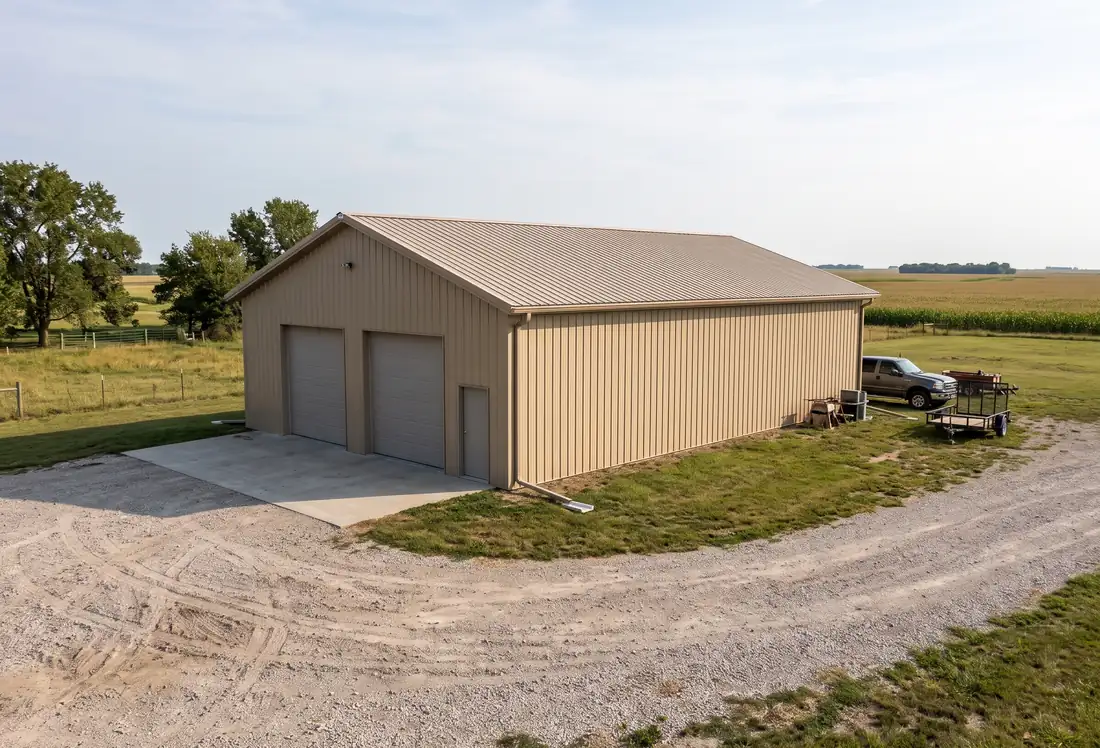
Box gutter on a metal building is ordered or formed in the panel color and fixed to the eave strut. Panels shed rain fast, so the gutter must be big enough and the leaders plentiful. Wind off the water lifts loose runs, so bracket spacing matters.
What about marinas and waterfront sites?
Salt air attacks plated steel fasteners and galvanized gutter. Aluminum or coated steel with stainless fixings lasts far longer. Discharge near the shoreline is often regulated, so ask the city or Kitsap County before changing where water goes.
Where does the water go?
Usually into a storm system or the site's own drainage. Changing that can need approval from the City of Bremerton, the city you are in or Kitsap County. A commercial quote should say how leaders connect at grade.
Is registration required?
Yes. Washington's contractor registration law requires every construction contractor to be registered with L&I, bonded and insured, whatever the size of the job. The L&I lookup shows whether a registration is current. Property managers should also ask for a certificate of insurance naming them.
What should the quote cover?
- Registration number and insurance certificate
- Roof areas and the gutter and leader sizes for each
- Metal, gauge, finish and fasteners
- Bracket spacing and expansion joints
- Connection to site drainage
- How the roof and eaves will be reached
- Work hours and disruption to tenants
- A suggested cleaning schedule
How often should commercial gutters be cleaned?
At least twice a year, before the wet season and in spring. More under firs and cedars. Check scuppers after every windstorm.
How do apartment and condo boards handle it?
Most get one condition report for every building, then schedule cleaning and repairs building by building so residents are disturbed as little as possible. Keeping dated photos of each scupper and drain helps track problems and is useful at sale or renewal of insurance.
How do contractors reach high eaves?
Extension ladders, scaffolding or lifts, depending on height and ground. Sloping sites and soft winter ground limit what can be used. The quote should say how access is handled.
Commercial gutter terms
| Term | Plain meaning |
|---|---|
| Box gutter | A large, square-section steel gutter used on commercial roofs |
| Scupper | An opening through a parapet wall that lets a flat roof drain |
| Collector head | A box at the top of a downspout that gathers water from a scupper or from two gutters |
| Downspout | The vertical pipe taking water down from the gutter. Often called a leader |
| Expansion joint | A flexible break in a long run that lets the metal move with temperature |
| Outlet | The hole and short tube in the gutter floor where water drops into the downspout |
| Gauge | How thick the metal is. Aluminum house gutter is 0.027 or 0.032 inch; copper is sold as 16 or 20 ounce |
| Strap | A band holding the downspout against the wall |
| Cleanout | A removable cap at the point where a downspout meets an underground line |
How do I check the contractor?
Ask for the Washington L&I registration number and look it up on L&I's verify tool. Ask for a certificate of insurance, and get the work and price in writing before anything starts.